If you sell physical products with paid traffic, you already look at competitor ads. The question is how much you can learn from them. I run Sophistication, and we built Funnel Intel for this job, so I am not neutral. This post is the checklist I would use to judge any tool, ours included.
What does an ad intelligence tool actually do?
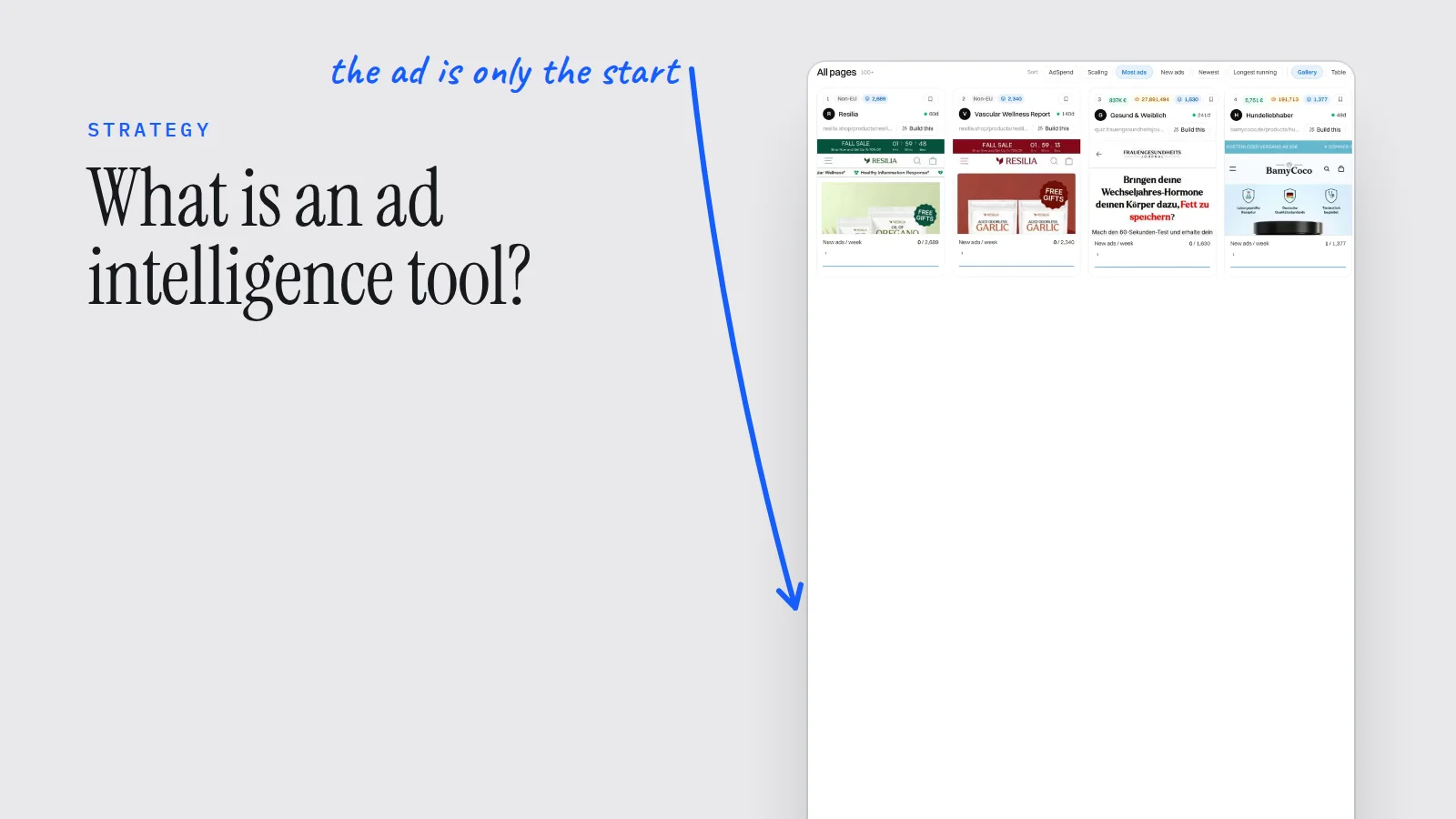
It does three things: it collects ads, it keeps them after they stop running, and it makes them searchable by brand, niche, format or wording. The raw source is public. Meta publishes ads in its Ad Library, and anyone can open it for free.
So the product is not the ads themselves. It is the work around them: history, search, grouping and everything the library does not tell you. That list is where tools differ.
What does the free Meta Ad Library already give you?
Enough to look at one brand. You see its active ads, the creative and the start date. For ads that Meta delivered in the EU, it also publishes reach.
What it does not give you: a way to ask “who is scaling in pet supplements right now”, the page behind an ad, the offer on that page, or ads that already stopped. For ordinary commercial ads it also shows no spend, and no tool can add that honestly, because Meta does not publish it.
What should you look for in one?
Five things decide whether a tool saves you time or only produces a nicer swipe file.
- Run time per ad. An ad a brand keeps alive for months is the best public sign that it pays. A tool without start dates cannot tell a test from a winner.
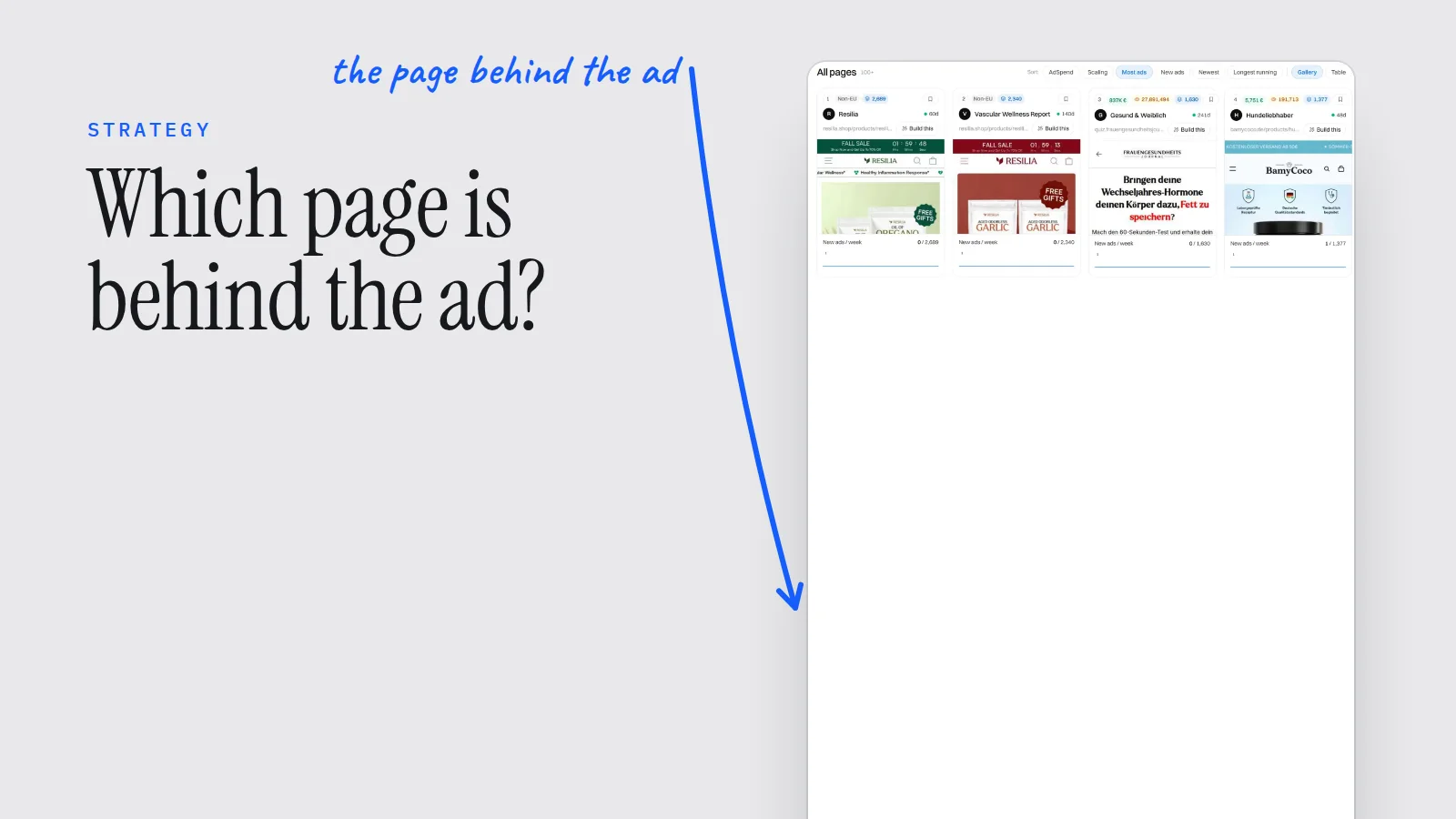
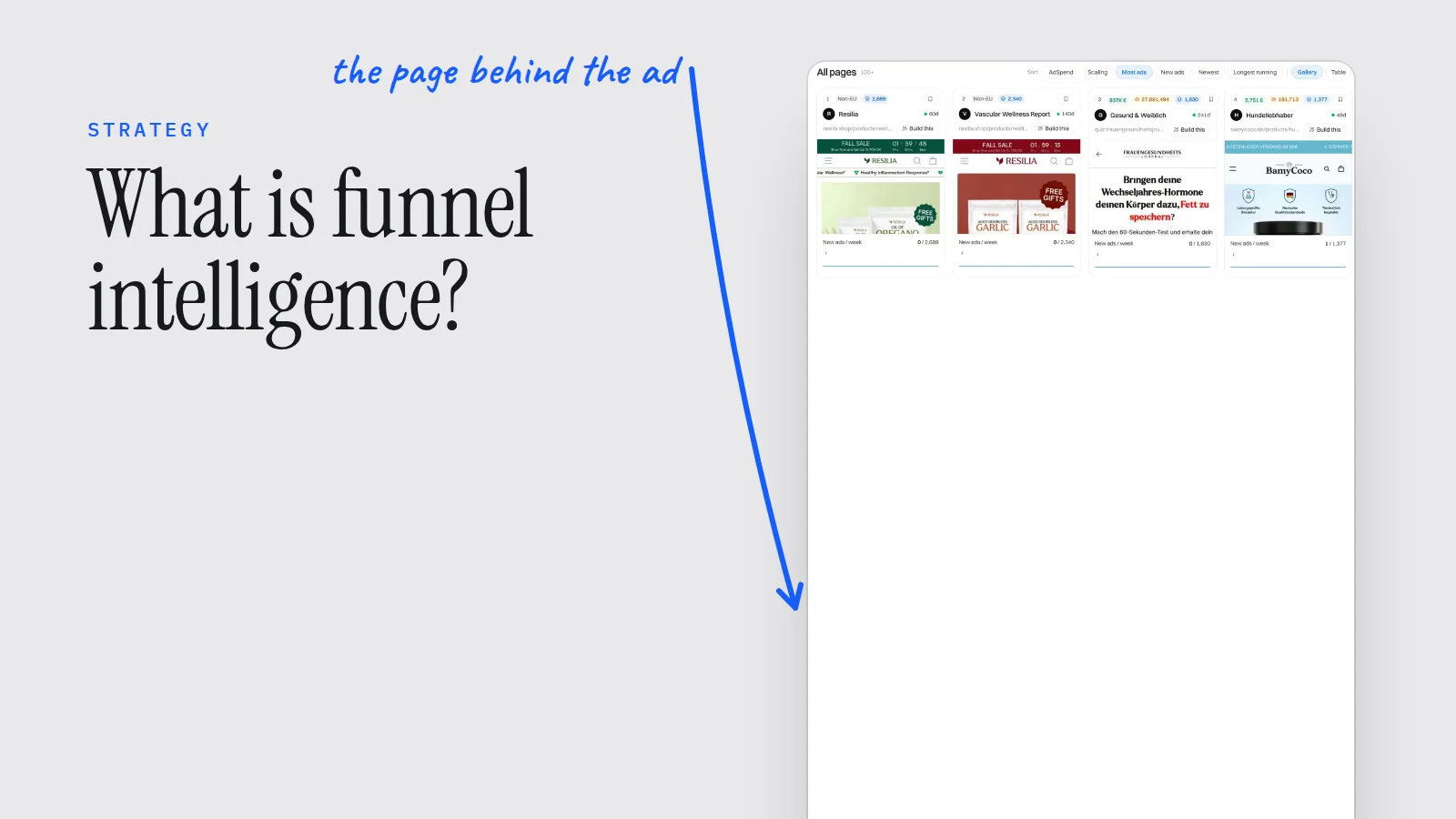
- The landing page behind the ad. The ad is the cheap half. The page decides whether the click turns into an order, and most tools stop before it.
- The offer on that page. Price, discount, bundle, subscription. Two brands with similar ads can afford very different clicks.
- Niche and market filters. You want "supplements, US" and not a feed of every brand.
- Honest limits. Reach where Meta reports it, a read date on every record, and no invented spend or revenue.
What does the data look like in practice?
I read the pet niche on 19 November 2026 to show what comes back.
Source: Funnel Intel, niche overview for pets, read on 19 November 2026. Shop and ad totals count all markets.
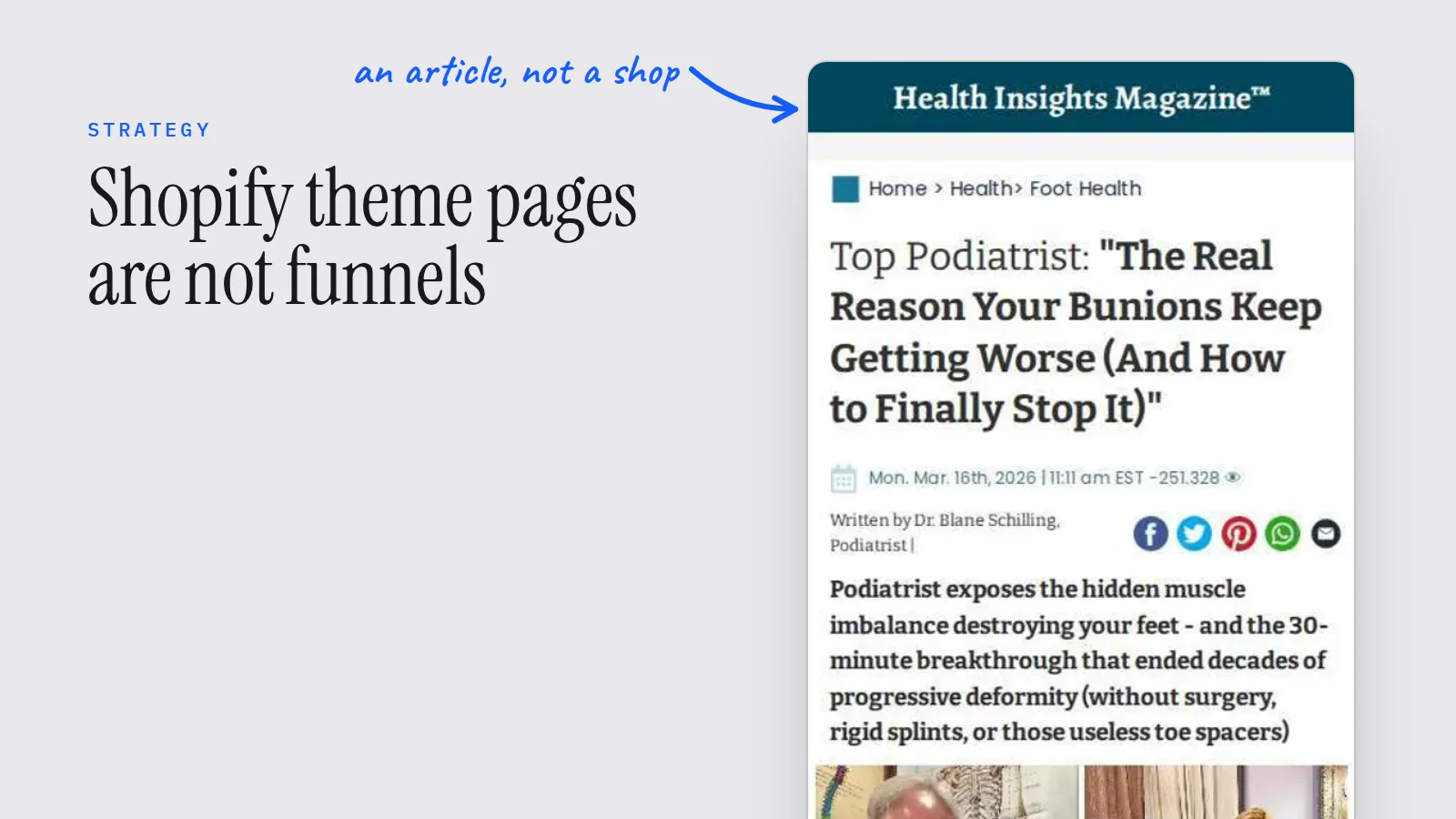
That is a market view: who runs how many ads and how many are new. Then you open one ad. A Pawsy Labs video that has run for 209 days opens with the line “Wildcrafted Wormwood + Black Walnut Hull” and sends the click to a parasite quiz page, not to a product page. Of the 14 strongest US pet ads in the read, 11 had a reviewed landing page: 8 product pages, 2 quizzes and 1 offer page.
An ad library alone would have shown you the video. It would not have shown you that the page behind it is a quiz.

When I looked at competitor ads without the pages behind them, I kept copying hooks and landing them on the wrong page.
What can an ad intelligence tool not tell you?
Four things, and you should distrust any tool that claims otherwise.
- Spend and revenue. Meta publishes no spend for these ads. A “spend estimate” is a guess.
- What converts. Long run time and many variants are signs, not proof. Treat each finding as a hypothesis for your own test.
- Your own numbers. Cost per purchase lives in your ad account, not in a competitor library.
- Everything. Every library is a sample of what exists.
How do you test a tool in one afternoon?
Pick a brand you know well and check three things: does the tool show its longest-running ads, does it show the page each ad lands on, and does it show the offer on that page? Then pick a niche you do not know and ask who is scaling. If the answers come with dates and you can open each record, the tool passes.
You can also put the same data into an AI assistant. The Sophistication MCP does this, and I explain the workflow in how to turn Claude or ChatGPT into a creative strategist. If you want to compare options first, read the best MCP servers for Meta ad research, and for the background on the connector, what an MCP server is. To do the page part by hand, see how to find the landing pages behind a competitor’s Facebook ads.
FAQ
Is an ad intelligence tool the same as an ad spy tool?
In practice, yes. “Spy tool” is the older name for software that collects competitor ads. The difference that matters is not the name but whether it stops at the ad or also shows the landing page and the offer.
Is the Meta Ad Library enough?
For checking one brand, yes. For research across a niche, history of stopped ads, landing pages and offers, no. The library shows the ad and, for EU delivery, reach, but not what sits behind the click.
Can an ad intelligence tool show my competitor’s revenue?
No. Meta publishes no spend for these ads and a competitor’s revenue is not public. A tool can show how long ads run and how many variants exist, which are signs, not figures.
Who needs one?
Any brand that buys cold traffic and wants to decide what to test next from evidence. It matters most for small teams that cannot afford to run every idea themselves.